
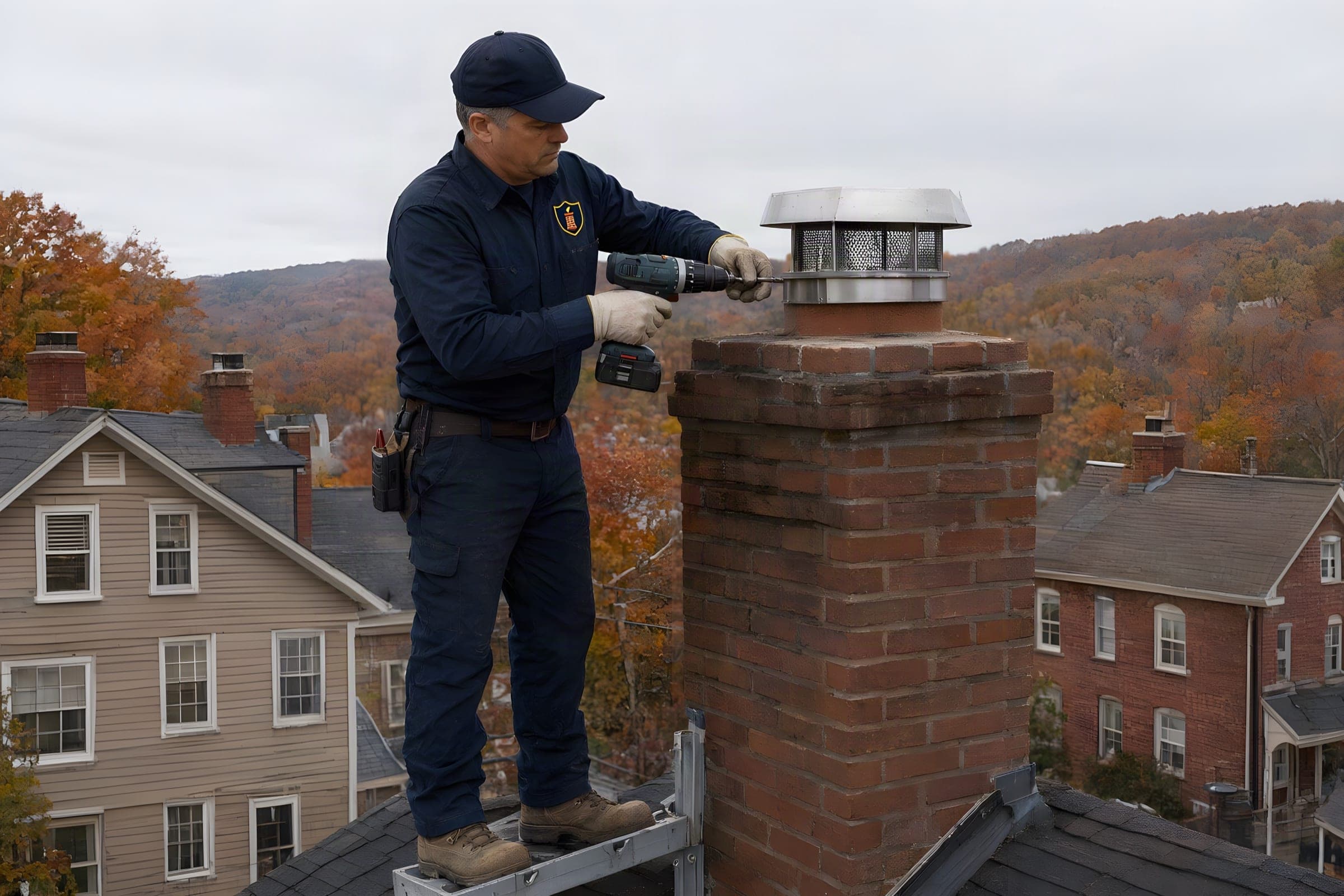
Chimney Cap Installation
The cheapest repair on any chimney: a stainless hood and screen that keeps weather and animals out.
Read more
Binghamton Master Chimney Sweep is the chimney sweep for Endwell homes that want the fireplace swept, the furnace flue checked and the top of the chimney sealed before winter. We clean, inspect, reline and repair, and the first flue is $250 with the inspection included.
Endwell was Hooper until 1921, and it didn't really fill in until IBM started hiring by the thousands. The land north of Watson Boulevard was built up in the 1940s and 1950s, and the streets east of Hooper Road in the 1950s and 1960s. That means most Endwell chimneys are now 60 to 80 years old, usually a brick stack with a fireplace flue and a furnace flue side by side.
When an old furnace comes out of an Endwell basement and a high-efficiency one goes in, the new unit often vents out the side wall and leaves the water heater alone in a flue built for something three times its size. That lonely water heater flue is a classic spot for condensation and a weak draft.
Ask your heating contractor what the new setup leaves in the chimney, then let us look. Changing an appliance is one of the times the national standards call for a fuller, camera-level inspection.
Look up at most Endwell rooftops and you'll see one brick chimney with two clay tiles sticking out the top. One is the fireplace flue, the other the furnace and water heater flue. They live side by side but age differently. The fireplace flue gets used a few weekends a year and mostly collects dust and the odd bird nest. The furnace flue works every day from October to May.
Gas and oil exhaust carry a lot of water vapor. In a warm, right-sized flue that vapor goes straight out the top. In a big, cold clay flue it condenses, runs down the tile joints and slowly dissolves the mortar. We find more crumbled mortar and fallen tile chunks at the bottom of Endwell furnace flues than anywhere else in the house. The cure is a stainless liner sized to what's actually burning down there.
Builders in the 1950s often finished the chimney top with a thin, flat mortar wash instead of a real crown. Eighty winters later it's cracked, and water runs straight into the brick. A crack you could slide a coin into calls for a rebuilt crown with a drip edge. Hairline cracks can usually be sealed with a flexible crown coat for a fraction of the price.
A lot of Endwell fireplaces went cold for twenty or thirty years and are now being lit again by new owners. Before that first fire, have it swept and looked at. Unused flues collect nests, leaves and fallen mortar, dampers rust shut or rust open, and a crack in a clay tile can sit unnoticed for decades. We'd rather find that on a camera screen in July than have you find it with a living room full of smoke. If everything checks out, you light the fire and enjoy it. If not, you know exactly what it takes and what it costs before you spend a dime.
Endwell shares Binghamton's numbers: roughly 86 inches of snow a year and about 133 days below freezing. Every time wet brick freezes, it gets pushed apart a little. Mortar joints soften, then sand out, then brick faces start to pop off. That's why the top few feet of an old chimney always look worse than the part below the roofline.
The Susquehanna runs along the south edge of Endwell, and the 2011 flood put water into basements along the river side of town. If yours flooded, check the chimney cleanout and the base of the flue. Silt can sit in the bottom of a flue for years, and when it blocks the furnace connection, exhaust can spill back into the basement. A working carbon monoxide alarm, which New York requires, is your backstop.
Stainless liners for gas and oil furnaces, water heaters, inserts and stoves. Sized to the appliance, with a top plate and cap.
A breathable water repellent on the brick and a flexible seal at the flashing. We never use a sealer that traps moisture inside the chimney.
Both flues brushed and vacuumed, then checked from top to bottom. Our first flue is $250 and the second is $150 on the same visit.
Crown coat for hairline cracks, a full rebuild for broken crowns, and one cap that covers both flues.
We grind out failed joints and repack them with mortar that suits 1950s brick, then clean the face so the repair blends in.
| Service | Notes | Price |
|---|---|---|
| Chimney sweep | First flue, inspection included | $250 |
| Second flue | Same visit | $150 |
| Water heater or furnace liner | Most two-story homes | $1,500 to $3,500 |
| Crown coat | Hairline cracks | $300 to $700 |
| Two-flue cap | Stainless, mesh sides | $400 to $900 |
East along I-81 and the river, the farmhouses and hamlets of Kirkwood run on a lot more wood heat. Our page for chimney sweep service in Kirkwood covers what we do out there.
The cheapest repair on any chimney: a stainless hood and screen that keeps weather and animals out.
Read more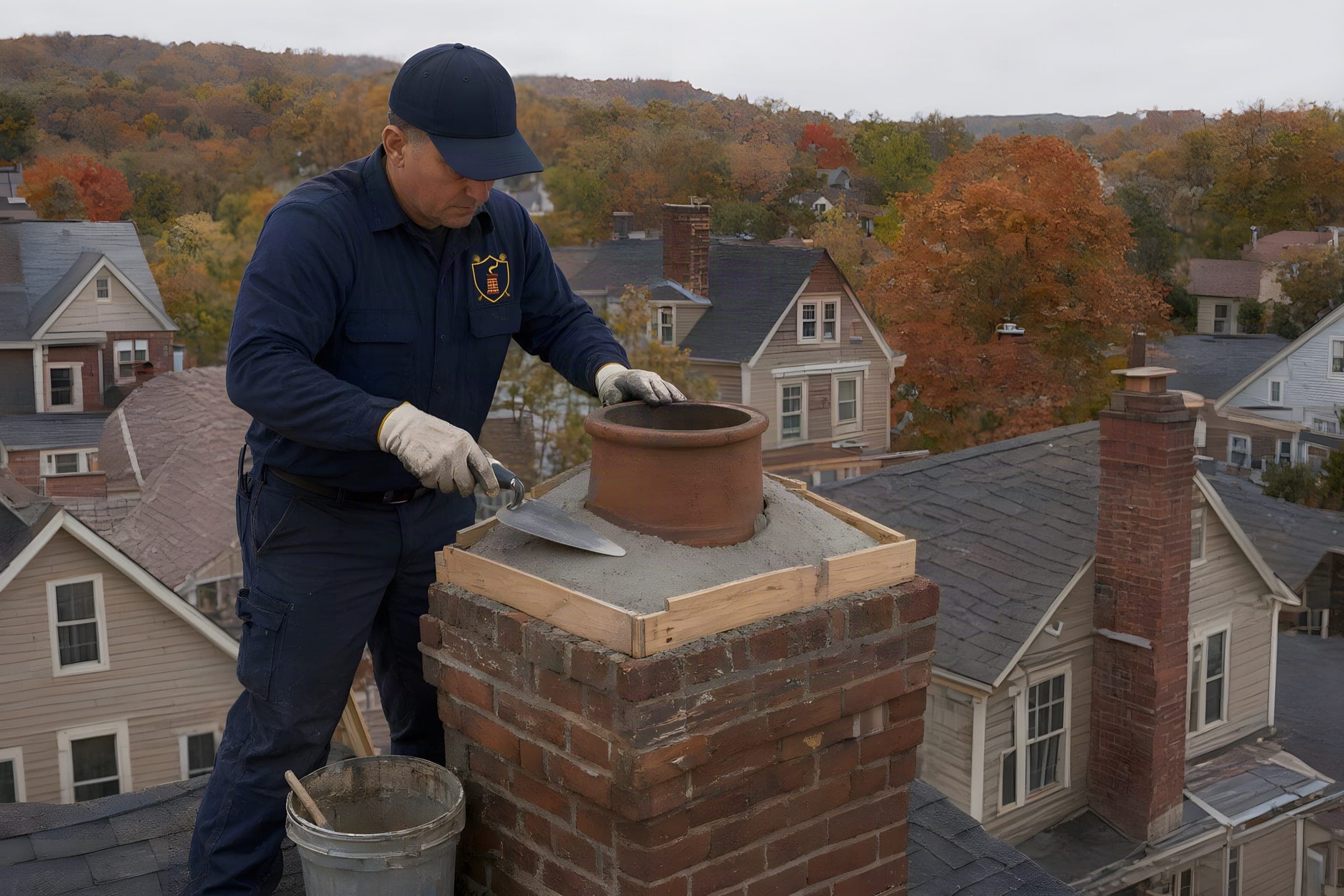
Hairline cracks sealed, broken crowns rebuilt with a real overhang so rain drips clear of the brick.
Read more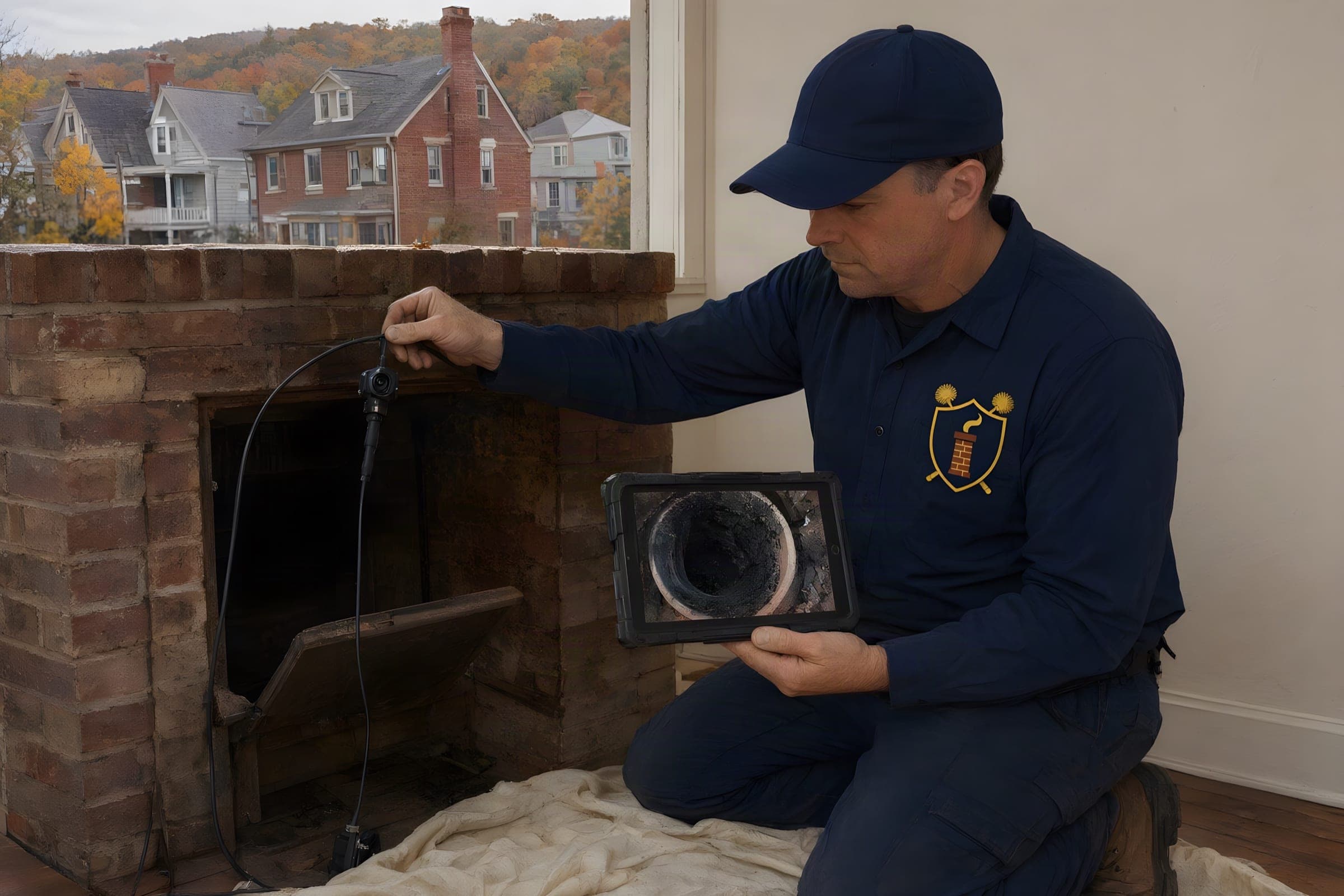
A yearly look with every sweep, or a camera run down the flue before you buy or switch stoves.
Read more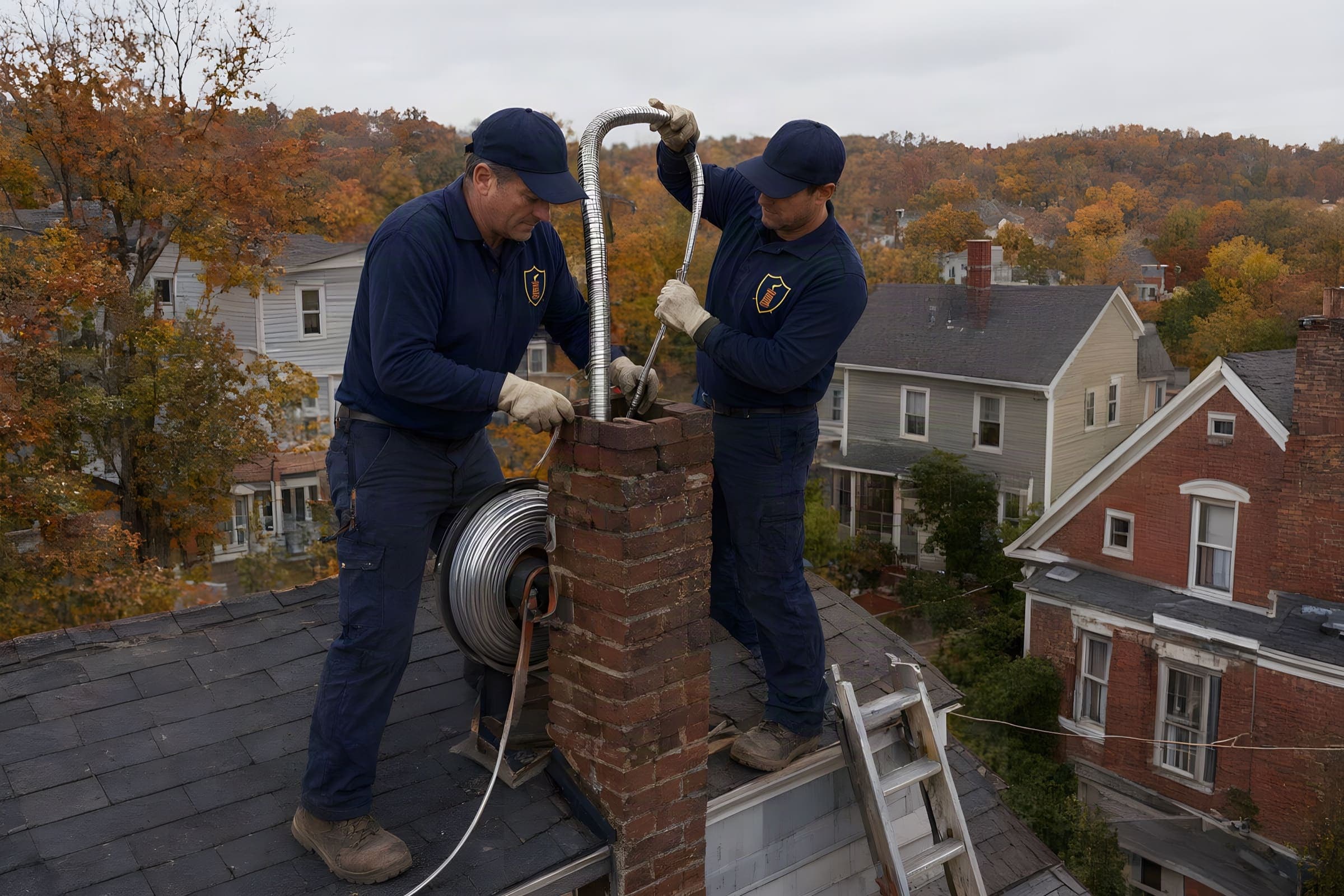
A stainless sleeve inside a cracked clay flue, sized to the stove, insert or furnace that uses it.
Read more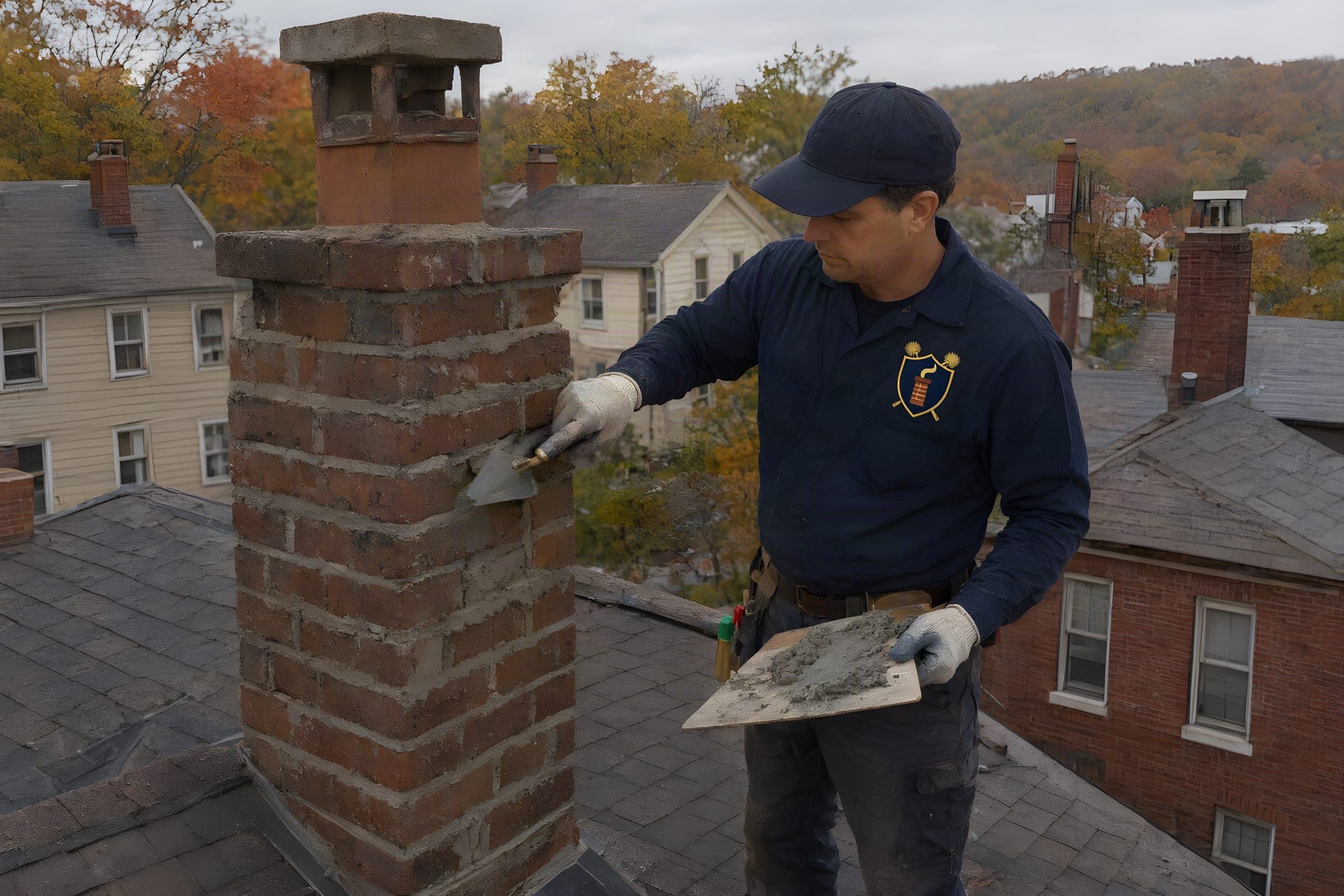
Chimney repointing, tuckpointing and brick repair: worn joints repacked and flaking brick replaced before the freeze gets further in.
Read more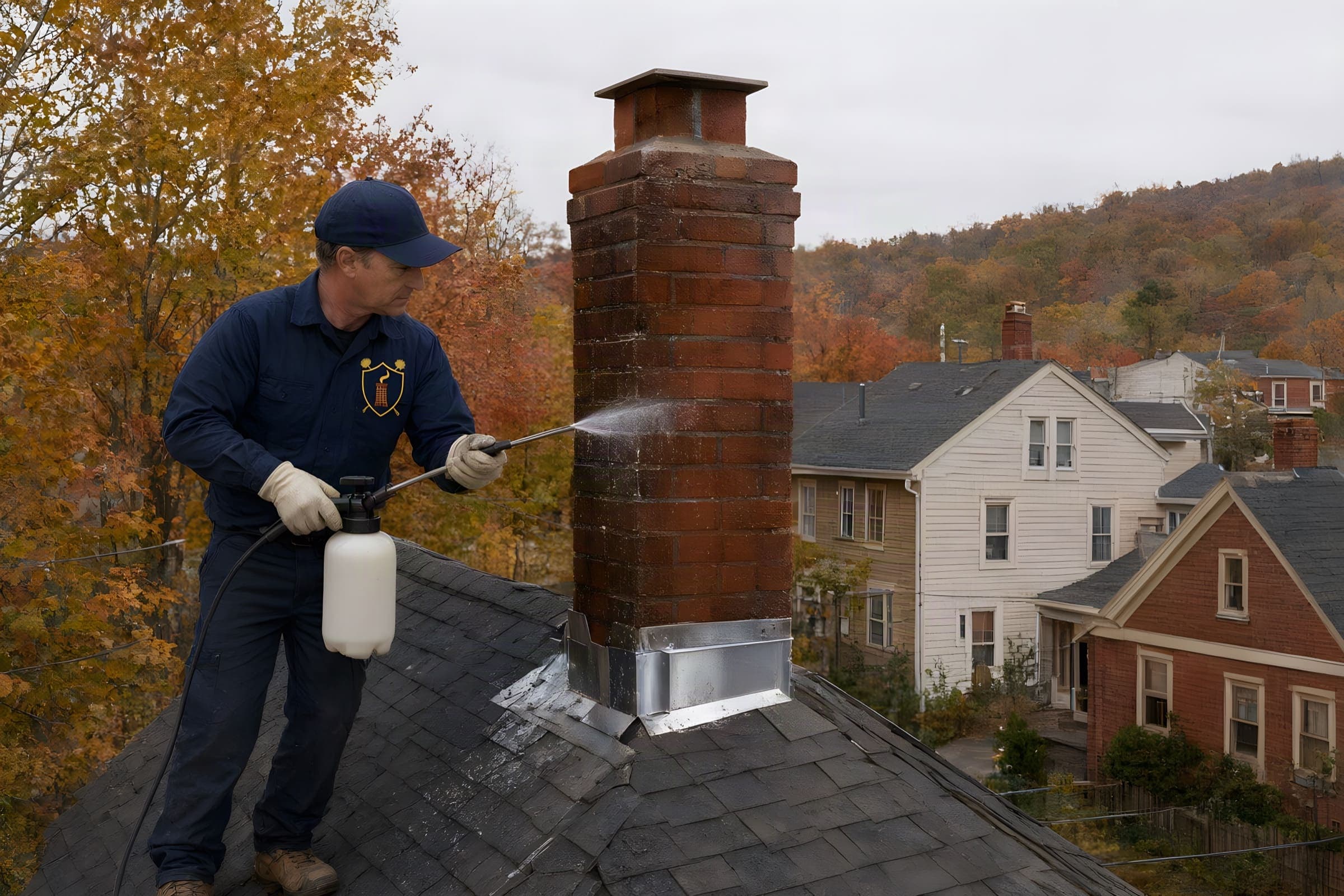
Leaks traced to the source, then sealed with a breathable repellent and flash seal.
Read more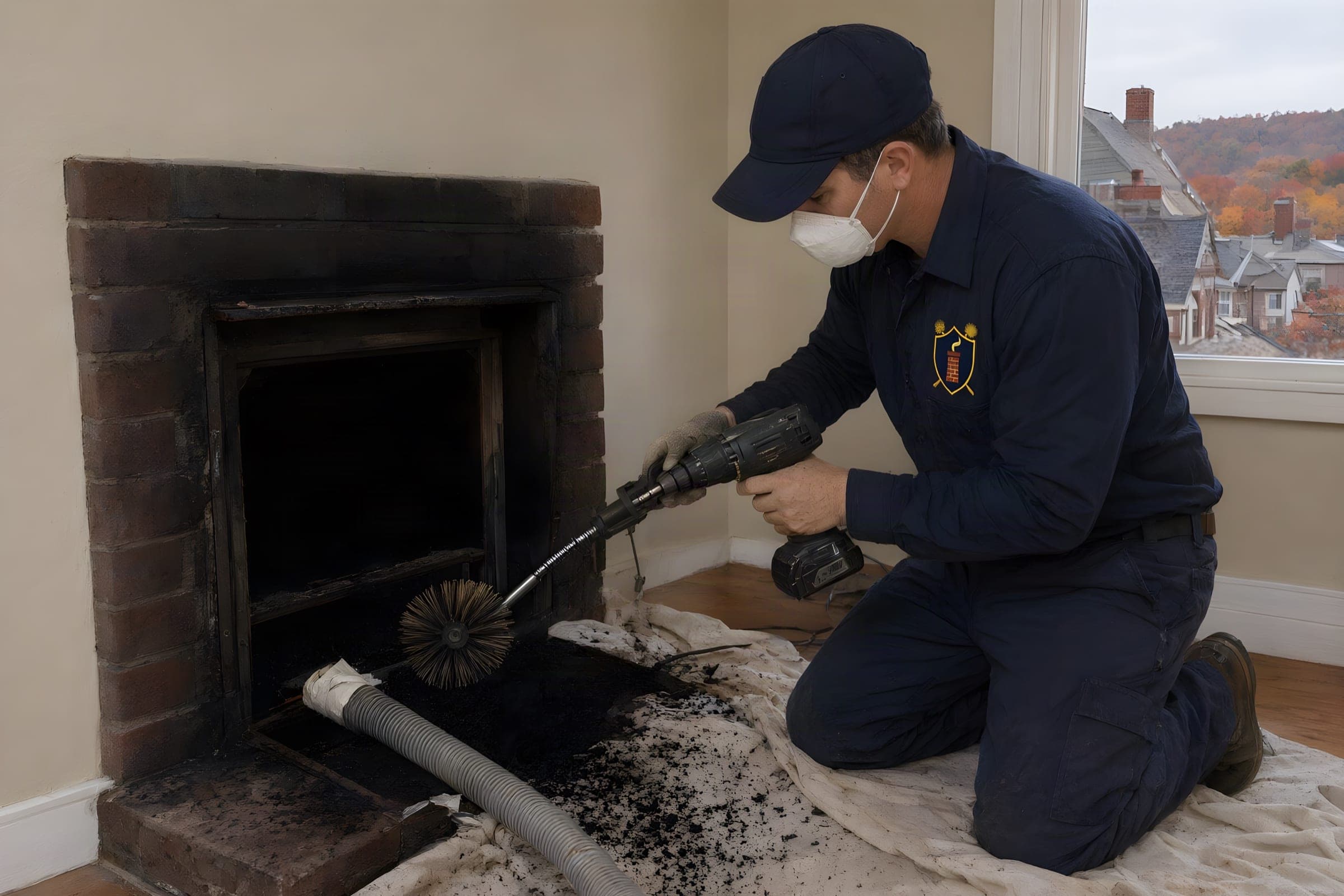
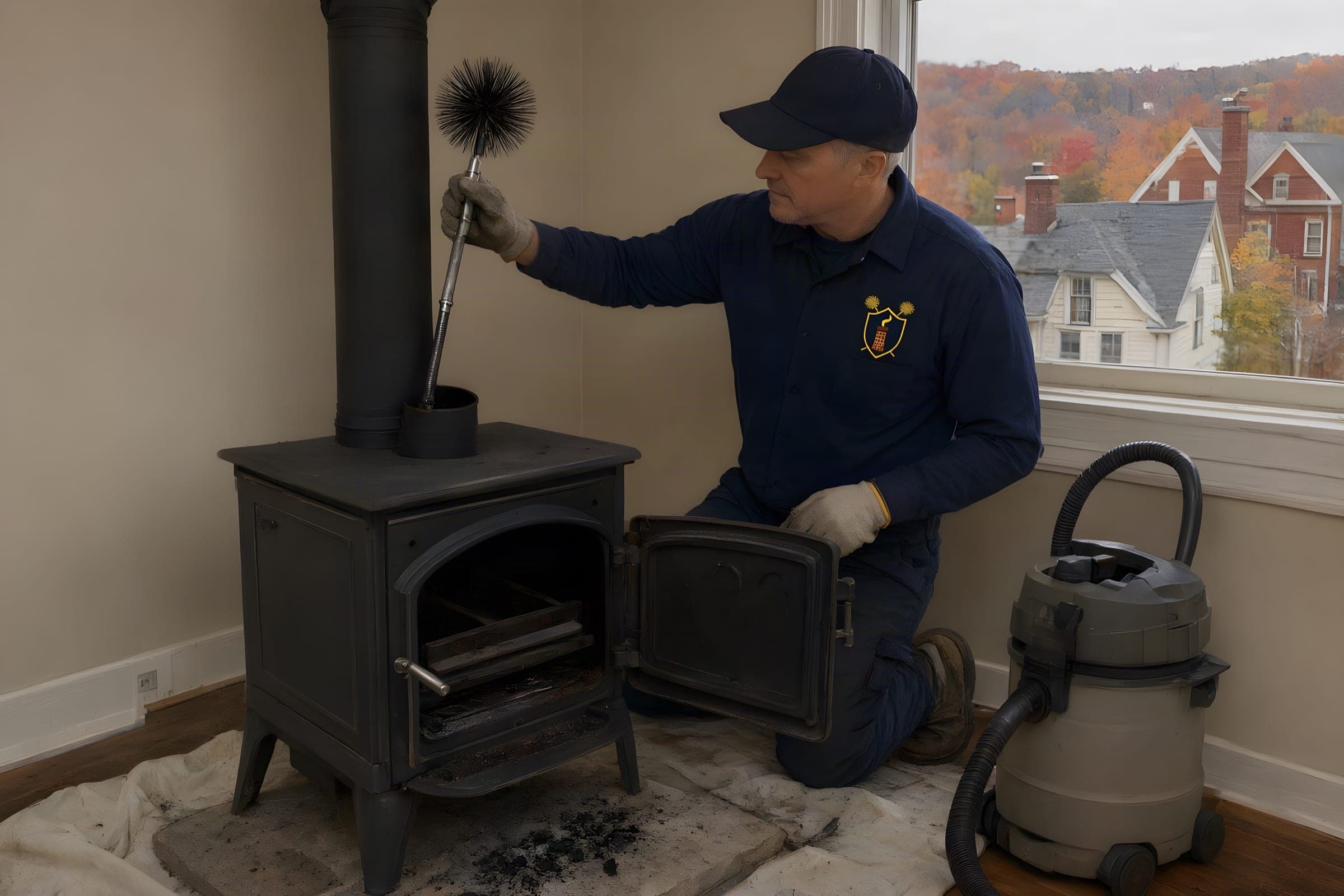
Stove and insert flues swept, baffle cleared and checked, $250 with the inspection.
Read more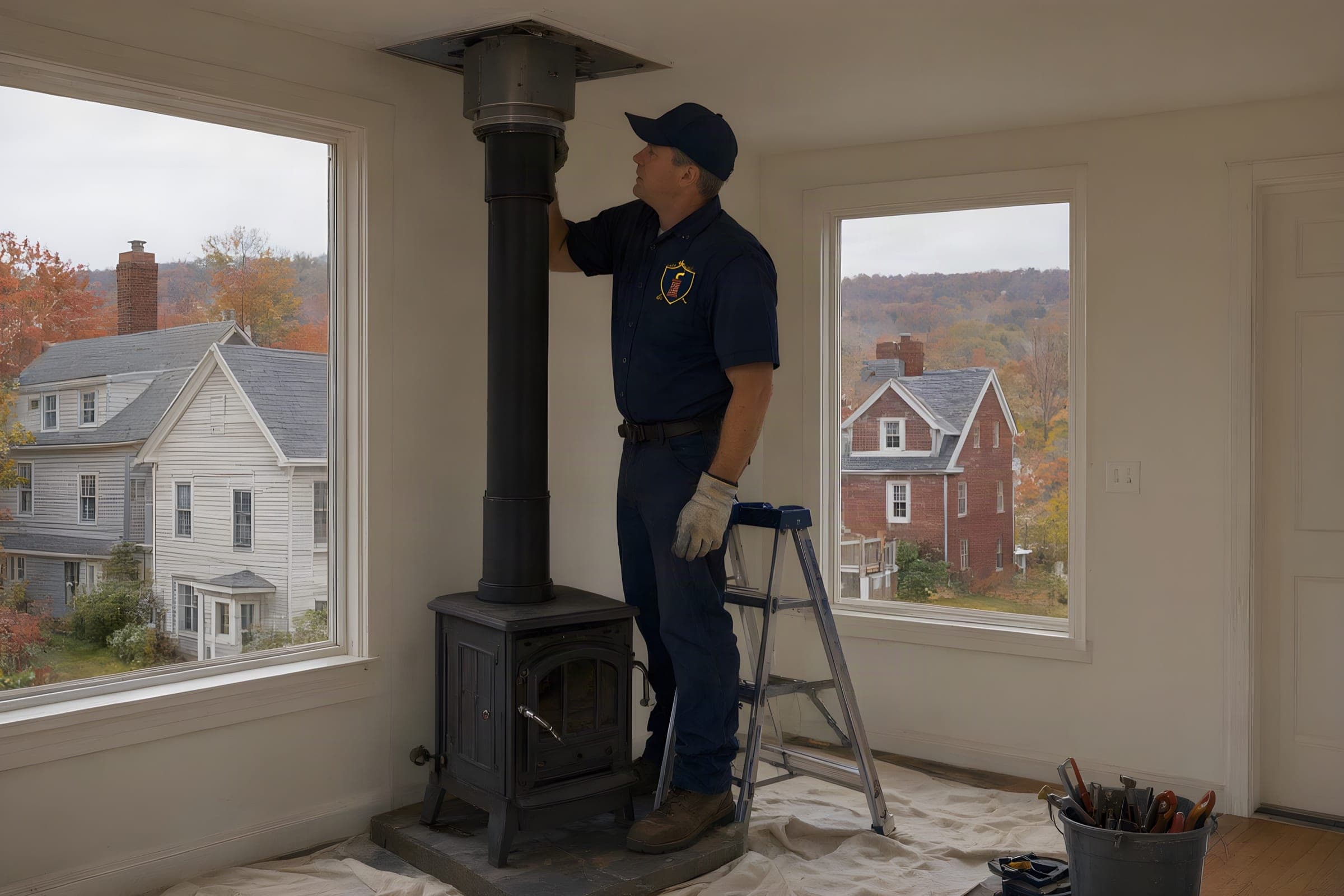
A new prefab chimney or liner for the stove you just bought, cleared to code.
Read moreA chimney sweep in Endwell costs $250 for the first flue, plus tax, including an inspection after cleaning. Most Endwell chimneys have a second flue for the furnace, and sweeping it on the same visit is $150. Repairs like a crown coat or liner are priced in writing before any work starts.
If the furnace now vents out the wall and the water heater is alone in the old clay flue, very likely yes. A small appliance in a big flue makes a weak, cold draft and condensation that eats the mortar. A stainless liner sized to the water heater fixes both. We check it on every inspection.
The top of the chimney freezes harder and gets wetter than any other part. After 60 to 80 years of freeze-thaw, the mortar joints sand out and brick faces pop off, and a thin mortar crown cracks. Repointing the top courses and rebuilding the crown usually stops it before a full rebuild is needed.
Book between April and July. From August through November every sweep in the Southern Tier is busy and lead times stretch out. A spring or summer sweep also gives time to fix whatever the inspection finds, like a crown or liner, before the furnace and fireplace start running every day.
Leave your name, number and a line about the chimney. We call back the same business day.